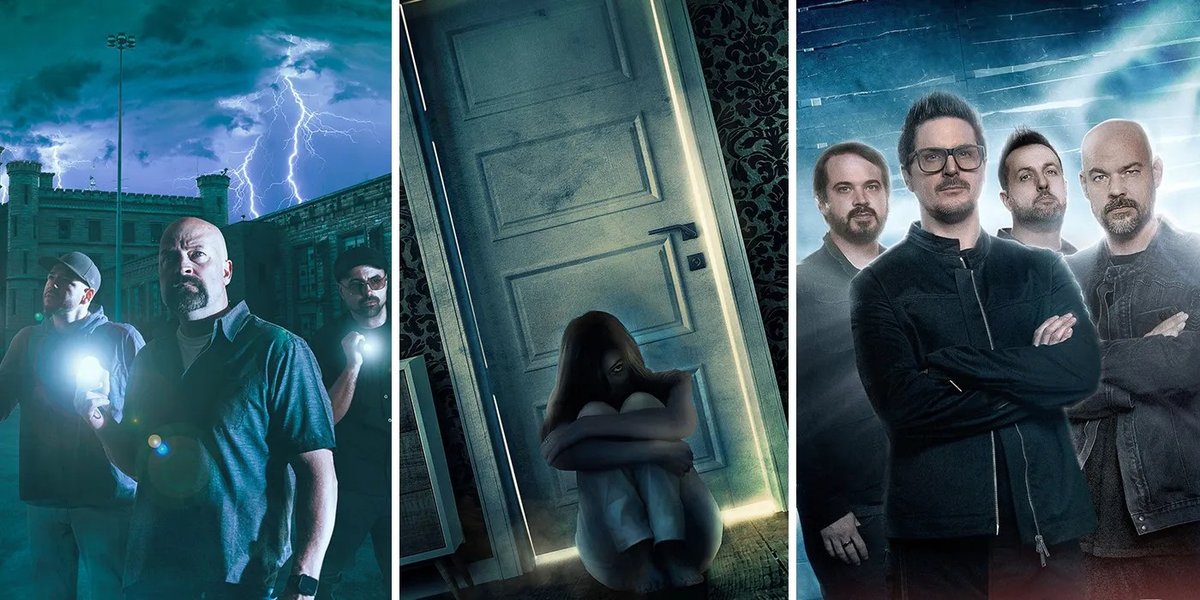
History & Evolution of Paranormal TV's Enduring Appeal
Something unseen flickers at the edge of human perception, a whisper of the otherworldly that has captivated imaginations for centuries. From campfire tales to the latest streaming sensation, our fascination with the unknown remains steadfast. Nowhere is this more evident than in the enduring success of paranormal television. The History & Evolution of Paranormal TV isn't just a tale of spooky shows; it's a fascinating journey through media innovation, cultural anxieties, and our collective hunger for what lies beyond.
This genre, now a staple of networks from the Travel Channel to the History Channel, didn't just appear out of thin air. It evolved from ancient storytelling traditions, print narratives, local news segments, and ultimately, a groundbreaking fusion with reality television. What started as simple documented accounts has transformed into a high-stakes, highly produced spectacle, blurring the lines between fact, fiction, and entertainment.
At a Glance: The Paranormal TV Phenomenon
- Ancient Roots: The genre's spirit traces back to early supernatural print stories, long before the camera existed.
- Early TV Explorers: Dedicated shows emerged in the late 1950s, using a documentary style to investigate alleged real-life mysteries.
- Reality TV Revolution: The early 2000s saw a pivotal shift, merging reality TV's "unscripted" drama with horror film aesthetics.
- Genre Explosion: The mid-2000s brought a boom of ghost hunting, UFO, and cryptid shows, solidifying its place in pop culture.
- Network Specialization: Some channels, like the Travel Channel, have dedicated themselves almost entirely to paranormal content.
- Critical Crossroads: Despite its popularity, the genre often faces scrutiny for its entertainment-over-science approach.
- Enduring Fascination: The core appeal lies in our innate desire to explore the unexplained and confront our deepest fears.
From Printed Pages to Prime Time: The Genesis of the Genre
Long before the flickering screen, the seeds of paranormal investigation were sown in print. Daniel Defoe's "A True Relation of the Apparition of One Mrs Veal" (1705) stands as an early example, presenting a supernatural occurrence as a factual account. This desire to document and interpret the extraordinary, even if through literary means, laid foundational groundwork.
Fast forward to the 1960s, and local TV news stations in the UK and US began airing segments on local ghost stories. These brief glimpses into unexplained phenomena hinted at a deeper public appetite. But it took a pioneering series to truly dedicate itself to the subject, pushing it into the national spotlight.
When TV First Dared to Look Beyond: One Step Beyond and In Search Of...
The late 1950s marked the true birth of dedicated paranormal television. One Step Beyond, which aired 96 episodes on ABC from 1959 to 1961, was a groundbreaking entry. Hosted by John Newland, the show promoted stories "based on real-life events," weaving narratives around incidents like the sinking of RMS Titanic and the 1906 San Francisco earthquake, all interpreted through a supernatural lens. It adopted a dramatic, often eerie, documentary style, captivating audiences with tales of precognition, apparitions, and unexplained coincidences.
Years later, another iconic series cemented the genre's documentary aspirations: In Search of... (1977-1982). Hosted by the legendary Leonard Nimoy, this show cast a wider net, exploring everything from UFOs and Bigfoot to the Bermuda Triangle and lost civilizations. Its serious tone, dramatic narration, and blend of historical investigation with speculative theories made it a cultural phenomenon. It wasn't just about ghosts; it was about the vast tapestry of unexplained phenomena, feeding a hunger for answers in an age of scientific advancement.
These early programs weren't just entertainment; they were foundational to the reality television genre itself, highlighting the inherent tension between documented fact and dramatic interpretation. They established a template: present a mystery, gather "evidence," and leave the audience to ponder the implications. For those looking to understand the landscape of paranormal television, it's clear these shows were pivotal in shaping public interest.
The Rise of the "Documentary-Style" Paranormal
The late 1980s and early 90s saw the genre evolve further, blending true crime with the unexplained, and even venturing into controversial territory.
Unsolved Mysteries: Mainstream Appeal for the Unexplained
Beginning in 1987, Unsolved Mysteries became a national sensation. While it covered a broad spectrum of cases—including missing persons, murders, and wanted fugitives—its segments on paranormal cases were particularly popular. With its dramatic re-enactments, direct appeals for public assistance, and host Robert Stack's iconic voice, the show brought stories of ghosts, UFOs, and cryptids into millions of homes, further normalizing the discussion of such topics within a documentary framework. It encouraged viewers to actively participate, blurring the lines between passive observation and active investigation.
The Controversy of Ghostwatch and the Sightings Expansion
In 1992, the UK experienced a stark reminder of the genre's power to provoke belief. Ghostwatch, a BBC television film, was presented as a live documentary investigating a poltergeist. Its realistic presentation, news-style reports, and convincing performances led many viewers to believe it was real, causing widespread panic and controversy. It highlighted the profound impact of perceived authenticity in paranormal programming.
Around the same time, Discovery Channel and Fox Broadcasting Company's Sightings (starting in 1996) also explored the genre, delving into UFOs, psychic phenomena, and other mysteries, cementing the "investigative documentary" style that characterized this era. These shows created a sense of discovery and exploration, inviting viewers into the process of unraveling secrets.
The Reality TV Revolution: Filming the Fear
The turn of the millennium marked a seismic shift for paranormal TV. Reality television was exploding, and it was only a matter of time before its raw, unscripted format merged with the visceral thrill of the supernatural. This fusion created a new visual language and storytelling style that would define the next two decades.
MTV's Fear: A Game Changer
In 2000, MTV's Fear pioneered this new approach. It brilliantly merged the found-footage horror film aesthetic with the burgeoning reality TV format. The show sent teams of young investigators into genuinely terrifying, reputedly haunted locations, tasking them with filming themselves using portable cameras in dark, often abandoned environments. This established a new visual look, with its shaky cam, night vision, and grainy footage becoming instantly recognizable. The intense music, rapid-fire editing, and the direct, often panicked, address from the investigators created a deeply immersive and unsettling experience.
Fear's influence was immediate and profound, inspiring a wave of shows that adopted its signature style:
- Fox Family's Scariest Places on Earth
- Murder in Small Town X (2001)
- Scare Tactics (2003)
These shows leaned into the psychological aspect of fear, often placing participants in stressful, isolated situations designed to heighten their susceptibility to suggestion and generate dramatic reactions. This was no longer just about documenting; it was about experiencing.
The Mid-2000s Boom: Ghost Hunters, Cryptids, and Ancient Astronauts
The mid-2000s witnessed an unprecedented expansion of paranormal television, solidifying its place as a mainstream entertainment force. This era saw the rise of iconic series that would become synonymous with the genre.
The Ghost Hunter Phenomenon
- Ghost Hunters (2004, Sci Fi/Syfy): Arguably the most influential show of this era, Ghost Hunters introduced the concept of "paranormal investigators" equipped with specialized gear to scientifically (or pseudo-scientifically) detect ghostly activity. Led by plumbers Jason Hawes and Grant Wilson, the TAPS (The Atlantic Paranormal Society) team popularized thermal cameras, EMF detectors, and EVPs (Electronic Voice Phenomena), creating a template that countless shows would follow. It promised a skeptical, evidence-based approach, even if critics later questioned its rigor.
- Ghost Adventures (2008, Travel Channel): Taking a more aggressive, confrontational approach, Ghost Adventures distinguished itself with its highly emotive hosts (Zak Bagans, Aaron Goodwin, Nick Groff) who often goad spirits into interacting. Their over-the-top reactions and willingness to engage directly with perceived entities brought a new level of drama and personality to the genre.
- Paranormal State (2007-2011, A&E): This show followed Penn State student Ryan Buell and his Paranormal Research Society, offering a more academic and often religiously-tinged perspective on hauntings and demonic activity, often featuring psychic mediums.
Beyond Ghosts: Cryptozoology and UFOs Get Their Due
The boom wasn't just about ghosts. Other aspects of the unexplained found their footing on various networks.
- Destination Truth (2007-2012, Syfy): Josh Gates led a team around the globe, seeking evidence for cryptids like Bigfoot, Yowie, and the chupacabra, as well as investigating other supernatural phenomena and mysteries.
- History Channel's Entry: Recognizing the public appetite, the History Channel joined the fray with shows like UFO Files, MonsterQuest, and UFO Hunters. But perhaps its most impactful contribution came with Ancient Aliens, which started as a special in 2009 before becoming a full series in 2010. This show popularized the theory that extraterrestrial beings visited Earth in ancient times and influenced human civilization, capturing a massive audience and becoming a cultural touchstone with its distinctive theories and recurring "I'm not saying it was aliens, but it was aliens" meme.
This period cemented paranormal TV as a powerhouse, offering a wide array of formats and mysteries for every taste. To truly appreciate its impact, it's worth taking a closer look at how paranormal programming has evolved over the decades.
The Shifting Landscape: Network Specialization and Revivals
As the genre matured, networks began to refine their strategies, some embracing paranormal content fully, others scaling back.
Syfy's Exit and Travel Channel's Full Embrace
By 2015, Syfy (formerly Sci Fi Channel), which had been a key player with Ghost Hunters and Destination Truth, began to abandon paranormal programming, shifting its focus back to science fiction.
Conversely, the Travel Channel made a strategic pivot, doubling down on the paranormal. It became the de facto home for supernatural investigations, centering its programming around the highly popular Ghost Adventures. This shift brought a host of new and continuing series to its lineup, including:
- Kindred Spirits (2014–present)
- Ghost Nation (2019–2021)
- Various spin-offs and specials featuring its roster of popular paranormal investigators.
This network specialization meant that viewers looking for new paranormal adventures knew exactly where to tune in, creating a dedicated hub for the genre.
The Endurance of Fan Favorites: Ghost Hunters Returns
The enduring popularity of certain shows proved irresistible. In 2019, Ghost Hunters was revived by A&E for its 12th season, followed by a 13th season in 2020. This demonstrated that even after years off the air, classic formats and beloved investigators could still draw a significant audience, proving the genre's deep roots and loyal fanbase.
The "Reality" Debate: Theater, Science, and Plausibility
Despite its widespread appeal, paranormal TV, particularly ghost hunting shows, has always faced scrutiny. Critics and scientists often question its methods and claims.
Is It Science or Spectacle?
Mike Hale, writing for The New York Times, famously characterized ghost hunting shows as "pure theater," drawing comparisons to professional wrestling for their formulaic approach. You know the drill: investigators enter a location, lights flicker, a strange noise occurs, someone feels a chill, and the camera cuts to a dramatic reaction. This predictable structure, while entertaining, often overshadows any genuine scientific inquiry.
Ed Stockly of the Los Angeles Times echoed this sentiment, noting that while shows like Ghost Hunters and Ghost Adventures often promise skepticism and a scientific approach, they frequently fail to consistently deliver. The pursuit of "evidence" often seems to serve the narrative more than a rigorous investigation.
Science writer Sharon A. Hill is direct: these shows are entertainment, not science documentaries. They often "boost reality" through editing and dramatic timing to maintain tempo and viewer engagement. The goal isn't necessarily proof, but plausibility and excitement.
Creating "Plausibility Structures"
Sociologist Diane Dorby suggests that these shows offer "plausibility structures" for interpreting death. In a society that often struggles with the abstract nature of mortality, ghost hunting shows provide a tangible (if speculative) framework for understanding what might happen after we die. They offer comfort, narrative, and a sense of continued connection, even if through bumps in the night and shadowy figures on thermal cameras. This resonates deeply with viewers, regardless of their belief in ghosts.
Ultimately, these critiques highlight the inherent tension at the heart of reality TV itself: how much is truly "real," and how much is crafted for the camera? Early paranormal reality programs like Alcoa Presents: One Step Beyond and In Search Of… set the stage by adopting documentary styles and direct audience address to create realism. This duality—the promise of truth versus the demands of entertainment—remains a defining characteristic of the genre.
The Enduring Allure: Why We Keep Watching
So, what fuels this relentless fascination? Why does paranormal TV continue to captivate millions, spawning new shows, new investigators, and new theories year after year?
- The Thrill of the Unknown: Humans are inherently curious. We crave answers to life's biggest questions, and the paranormal offers a tantalizing glimpse into possibilities beyond our current understanding.
- Confronting Our Fears: There's a primal satisfaction in safely confronting the scary. Paranormal shows allow us to experience fear, suspense, and the chilling possibility of the supernatural from the comfort of our couches.
- Validation of Beliefs (or Doubts): For believers, these shows offer validation that their experiences or intuitions aren't isolated. For skeptics, they provide fodder for debate and critical analysis. The shows cater to both ends of the spectrum.
- Community and Connection: Shows like Ghost Hunters and Ghost Adventures have built passionate fan bases. Viewers discuss episodes, share their own experiences, and feel a sense of belonging within a community that explores the unexplained.
- Technological Fascination: The gear itself is appealing. Seeing investigators use EMF meters, thermal cameras, and spirit boxes taps into our love for gadgets and the idea that technology might bridge the gap between worlds.
- Storytelling at its Core: At their heart, these are compelling stories. Whether it's a tragic historical haunting, an ancient alien mystery, or a cryptid encounter, humans are hardwired for narrative. The paranormal genre delivers dramatic, often emotional, narratives that resonate deeply.
Curious about what makes these narratives so sticky? It's all part of the unique appeal of paranormal shows on television.
Beyond the Ectoplasm: What's Next for Paranormal TV?
The paranormal television landscape is constantly shifting, but its core appeal remains undeniable. As technology evolves, so too will the methods of "investigation" and presentation. We're already seeing more sophisticated graphics, immersive virtual reality experiences, and interactive elements integrating into online content.
Future iterations might lean even further into:
- Deep Fakes & AI: The ethical implications of using AI to generate "evidence" will be a fascinating (and potentially terrifying) development.
- Citizen Science: Platforms that allow viewers to submit and analyze their own "paranormal" footage, blurring the line between passive viewing and active participation, could become more widespread.
- Global Exploration: An increased focus on paranormal phenomena from diverse cultures and mythologies worldwide, moving beyond predominantly Western ghost stories.
No matter the format, the underlying human desire to peer into the void and confront what we cannot explain will continue to drive the evolution of paranormal TV. From Defoe's printed pages to today's high-definition ghost hunts, this genre has consistently adapted to new media, reflecting our timeless quest for answers to the mysteries that haunt us.